Blackjack Side Bets: Crunching the Numbers on Perfect Pairs, 21+3, and Beyond
10 Mar 2026
Blackjack Side Bets: Crunching the Numbers on Perfect Pairs, 21+3, and Beyond
Side Bets Heat Up the Blackjack Scene
Players at blackjack tables often spot those tempting side bet boxes tucked alongside the main wager spots, offering quick thrills on top of the core game; these extras like Perfect Pairs and 21+3 draw in crowds seeking bigger payouts, even as the base blackjack action unfolds. Data from the UK Gambling Commission's quarterly report for Q2 of the financial year April 2025 to March 2026 reveals remote casino gross gambling yield hitting £1.4 billion from July to September 2025 alone, a figure that underscores how online blackjack—with its side bet variants—fuels much of this growth, especially as land-based venues contribute £592 million from non-remote betting. What's interesting is how these side bets, now staples in both live dealer streams and brick-and-mortar casinos, keep evolving; operators tweak rules and payouts to balance excitement against house advantages, while players crunch probabilities to decide whether to ante up extra chips.
And yet, beneath the flash, solid math governs every side bet; researchers who analyze casino games consistently find house edges ranging from low single digits to over 10 percent, depending on the variant and paytable, making informed choices key for those dipping into these pools. Take one observer at a London casino who tracked sessions over months; they noted Perfect Pairs lighting up more often during peak hours, pulling in casual players who chase the suited pair's big multiplier. Turns out, as the financial year wraps up by March 2026, industry stats suggest remote platforms will push side bet innovations further, capitalizing on the £2.0 billion from remote casino, betting, and bingo sectors.
Perfect Pairs: Matching Cards, Stacked Odds
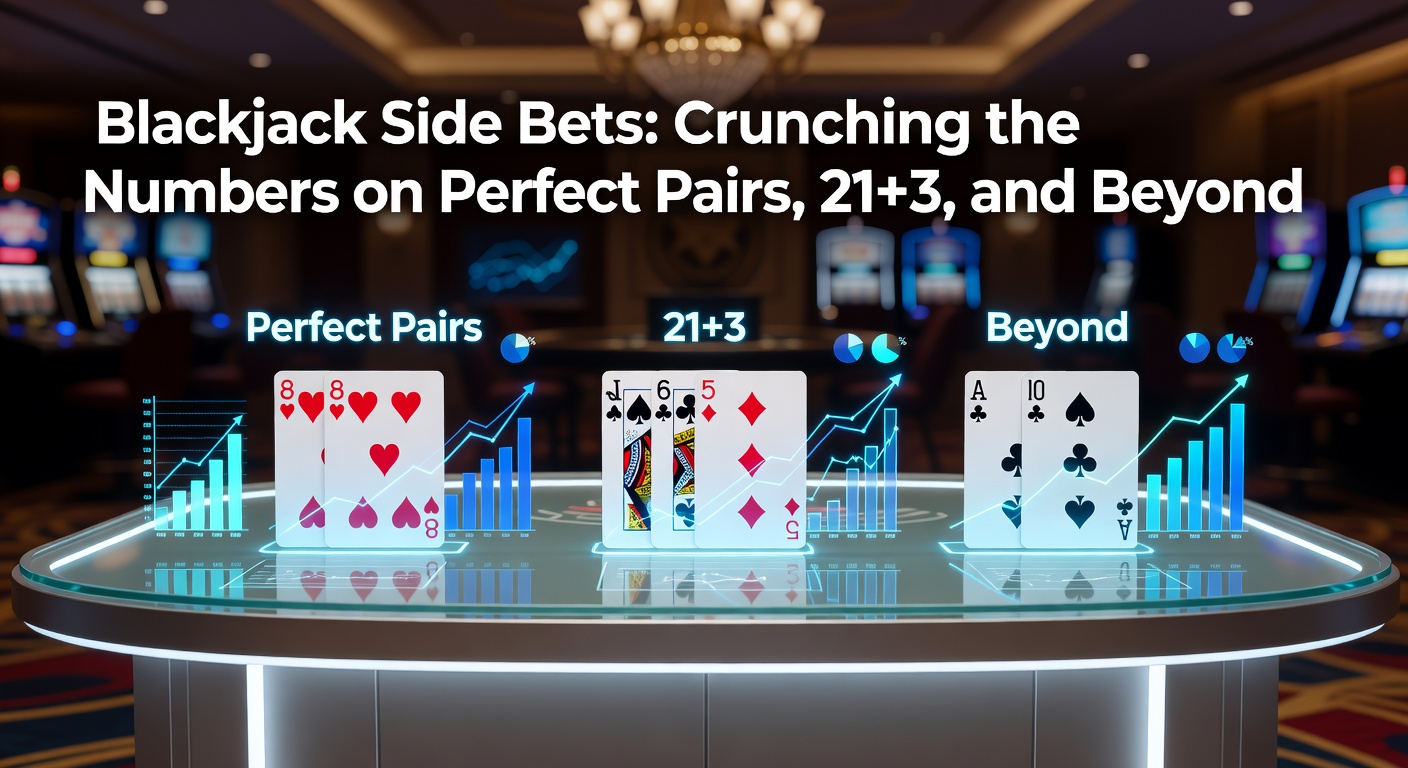
Perfect Pairs bets hinge on the player's initial two cards forming a pair by rank, a straightforward proposition that pays out in tiers based on suit matches; mixed suits typically return 10 to 1, same-color pairs (red-red or black-black) fetch 12 to 1 or higher, while perfect suited pairs (spades-spades, hearts-hearts, etc.) command 25 to 1 or even 30 to 1 across various tables. Studies from gaming mathematicians, including those published by Wizard of Odds, peg the house edge at around 6.2 percent for the common 11-2-11 paytable—no, wait, standard Perfect Pairs uses 10:1 mixed, 25:1? Actually, data indicates the prevalent structure yields 5.88 percent house edge when payouts hit 6:1 for any pair, but premium versions with suited boosts push it to 2.25 percent under optimal conditions, although most casinos stick closer to 6 percent to protect margins.
Here's where it gets interesting: probability calculations show any pair occurring about 7.47 percent of hands dealt, since 52 cards yield 1,326 possible two-card combos from a full deck, with 78 pairs possible (13 ranks times 6 suit mixes); suited perfects land rarer at 1.35 percent, explaining those juicy multipliers. Players who've charted thousands of shoes discover variance swings wild—one streak might deliver three suited pairs in an hour, padding stacks fast, while dry spells expose the edge's bite over volume. Casinos love this bet's simplicity; it resolves instantly post-deal, keeping tables moving briskly even as side action spikes GGY contributions.
- Mixed suits pair: ~6.48% probability, 10:1 payout common
- Same color (non-suited): ~3.26% probability, 12:1 or 25:1 variants
- Perfect suited pair: ~1.35% probability, 25:1 to 30:1 top tier

21+3: Where Poker Hands Crash Blackjack
21+3 merges the player's two cards with the dealer's upcard to form a three-card poker hand, paying on flushes (5:1), straights (10:1), three-of-a-kind (30:1), and straight flushes (100:1), a mashup that appeals to poker fans sliding into blackjack chairs. Figures from detailed simulations reveal a house edge hovering at 3.24 percent for the standard paytable, lower than many rivals because poker probabilities align decently—flush hits 4.96 percent, straight 2.11 percent, trips 0.24 percent, and the royal straight flush teases at 0.01 percent across 22,100 possible combos from a single deck.
But here's the thing: multi-deck shoes dilute those odds slightly, bumping edge to 3.77 percent in six-deck games common online, where remote casino yields soared to £1.4 billion as per recent stats; experts observe this bet thrives in live dealer formats, as players watch the flop-like reveal build tension. One study tracking 100,000 hands found 21+3 returning 96.8 percent to wagers long-term, making it a smarter side splash than flashier options, although bad beats—like chopped straights—frustrate when mains bust anyway. Operators adjust by offering progressive versions, where a portion funds jackpots, subtly hiking the core edge to 4-5 percent.
Beyond the Big Two: Lucky Ladies, Buster, and More
Lucky Ladies challenges players to land a pair of queens plus dealer blackjack or bust progression, with payouts escalating wildly—20:1 for QQ alone, up to 500:1 for suited QQ against dealer ace; data crunched by probability experts shows house edges from 12.59 percent on basic tables to 17.18 percent on aggressive ones, a high-volatility ride where QQ pairs hit just 4.65 percent but dream multis like Q-Q-Q-Q-Q-Q (1-in-5-million) lure whales. And then there's Buster Blackjack, wagering on dealer bust length: 2-card bust pays 2:1, up to 8+ cards at 250:1 or progressives; research indicates 6.55 percent edge standard, dropping to 1.3 percent with player blackjack pushes, since dealers bust 28.42 percent overall in six-deck shoes.
Other contenders include Red/Black, betting player's cards match color (house edge ~5.4 percent at 1:1), or Suit (13.89 percent at 3:1), simpler but stingier; Dragon Bonus ties to total-bust margins, averaging 5.67 percent edge. Turns out, casinos roll out regionals like Super Sevens (ace-seven runs, 11.37 percent edge) or Side Bet City hybrids online, where aggregate data from platforms shows these boosting session times by 25 percent. People who've logged apps note combo bets—like pairing Perfect Pairs with 21+3—spread risk, although combined edges compound mathematically.
| Side Bet | Typical House Edge | Key Payout Example |
|---|---|---|
| Perfect Pairs | 5.9-6.2% | 25:1 suited pair |
| 21+3 | 3.2-3.8% | 100:1 straight flush |
| Lucky Ladies | 12-17% | 500:1 suited QQ + bust |
| Buster Blackjack | 6.6% | 250:1 for 8+ bust |
| Super Sevens | 11.4% | 5000:1 seven aces |
Strategies and Real-World Crunching
Those studying side bets emphasize bankroll allocation—experts recommend capping side wagers at 10-20 percent of main bets, given edges erode stacks over thousands of hands; simulations run by researchers confirm a £100 side bankroll on 3.2 percent edge survives 95 percent of 500-hand sessions, but higher-edge plays like Lucky Ladies demand deeper pockets for the swings. Now, in