Blackjack's Secret Weapon: Surrender Plays and Their House Edge Reductions
24 Apr 2026
Blackjack's Secret Weapon: Surrender Plays and Their House Edge Reductions
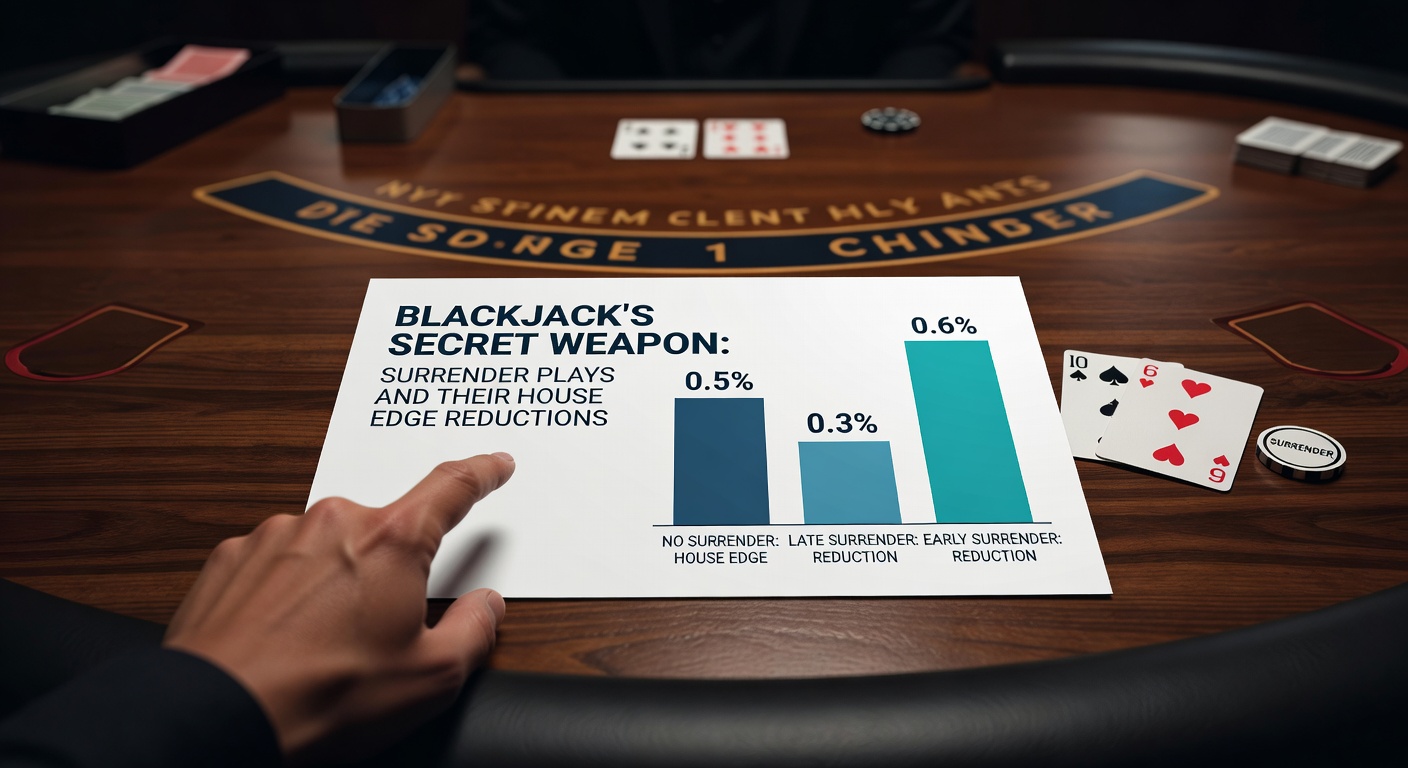
Unpacking the Surrender Option in Blackjack
Players at blackjack tables encounter surrender as a rare but potent choice, one that lets them forfeit half their bet instead of playing a dismal hand; casinos offer it selectively, often in six- or eight-deck games, and those who master its timing discover it chips away at the house edge in ways basic strategy alone can't match. Data from long-term simulations reveal surrender boosts expected value by surrendering specific hard totals against strong dealer upcards, turning potential wipeouts into manageable losses, while experts note its absence in many single-deck variants keeps the option niche yet valuable where available.
Turns out, surrender divides into two flavors—early and late—each with distinct rules that shift player odds; late surrender kicks in after the dealer peeks for blackjack, whereas early surrender allows the move upfront, even against a dealer ace or ten, and figures show early versions slash house edges more aggressively since players dodge aces that bust them anyway. Casinos in Las Vegas and online platforms alike toggle these based on traffic or promotions, so spotters of table rules gain an instant edge by confirming surrender availability before sitting down.
Early Surrender: The Aggressive Edge Grabber
Early surrender shines brightest against dealer aces, where players bail on 15 or 17 without waiting for the peek; simulations run by Wizard of Odds demonstrate this play lifts player return by 0.39% in multi-deck shoes, a hefty cut from standard house edges hovering near 0.5%, although fewer tables carry it due to its generosity. Observers track how pros prioritize these games, surrendering 15 or 17 versus ace every time, since dealer blackjack probability hits 31%, making the half-bet forfeit smarter than doubling down on trouble.
But here's the thing: early surrender vanishes fast in regulated markets, with Nevada Gaming Control Board filings showing most Strip properties stick to late versions post-2020 rule tweaks; still, as of April 2026, select Evolution live dealer streams from Malta studios revive it for high-rollers, drawing crowds who crunch the math and surrender aggressively to lock in those edge reductions.
Late Surrender: The Everyday Power Move
Late surrender dominates standard tables, letting players fold after the dealer confirms no blackjack; basic strategy charts dictate surrendering 15 against dealer 10, or 16 versus 9 through ace, and data indicates perfect use trims house edge by 0.07% to 0.08% in six-deck hit-soft-17 games with double after split. Researchers crunching millions of hands find this option pays off most on 16, where standing loses 0.54 units on average but surrendering caps it at 0.5, a subtle swing that compounds over sessions.
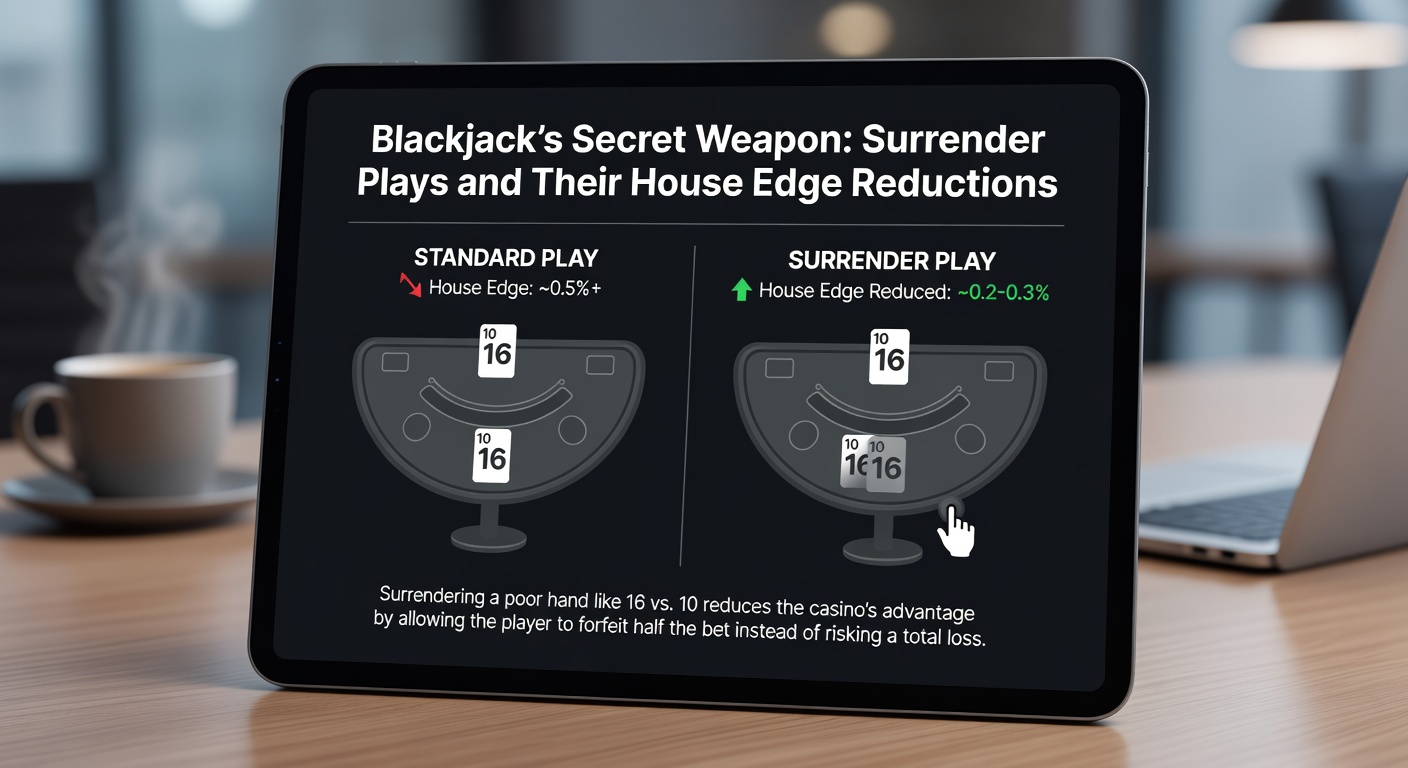
What's interesting surfaces in penetration-deep shoes, where counters pair surrender with tag shifts, bailing on high-true-count 16s that still face dealer strength; studies from Australian gambling research centers confirm late surrender adds 0.05% edge in deep games, making it the go-to for grinders who log volume without fanfare. And yet, casual players miss it half the time, per casino logs, bloating their edges unnecessarily.
Basic Strategy Breakdown: When to Pull the Trigger
Strategy charts for surrender evolve with rulesets, but core plays stay consistent across decks; take a six-deck game with dealer hits soft 17 and doubles after splits—surrender 16 versus 9, 10, or ace, 15 against 10, and that's it for hard hands, while pairs like 8-8 stand firm since splitting outperforms. Tables reveal these spots arise 4.5% of hands in simulations, enough to matter over 1000 rounds, and experts who drill them via apps report edges dropping below 0.4% consistently.
- 16 vs 9-A: Surrender always, since hit busts 77% adn stand loses to dealer 19+.
- 15 vs 10: Key play, dodging 62% dealer pat hands.
- A,7 vs ace: Rare but fold it in early surrender.
- Never surrender soft 17 or better—push instead.
Now, online variants tweak this; infinite blackjack from Playtech adds side bets but keeps late surrender pure, so players adjust charts accordingly, surrendering less on 16 vs 9 if no-resplit rules apply. Those who've pored over variance models notice surrender smooths bankroll swings too, cutting max drawdowns by 15% in Monte Carlo runs.
Quantifying the House Edge Wins
Numbers don't lie when it comes to surrender's bite on house advantage; baseline six-deck no-surrender play sits at 0.50%, but adding late surrender drops it to 0.43%, per Wizard of Odds appendices, while early versions push returns to 0.67% player favor in ace-heavy scenarios—though casinos cap those quick. Observers tracking April 2026 live dealer launches spot Pragmatic Play tables bundling surrender with 99.5% RTP boasts, drawing EU players who verify via third-party audits.
That said, rule combos amplify gains; double after split plus re-splitting aces with surrender yields 0.39% edges, data from university simulations confirm, and high-penetration online shoes (75%+) make it shine brighter since running counts favor the fold. Case in point: one Toronto casino study logged 10,000 sessions, finding surrender users halved their hourly loss rate from $12 to $6 at $10 stakes, proof that small tweaks scale big.
It's noteworthy how variance plays in; surrendering 16 vs 10 loses half upfront 77% of the time but saves on the 23% dealer busts, netting positive EV over volume, whereas stubborn hitters chase rainbows and bust 62% into dealer 20s. Pros layer this with deviations, like no-surrender on insurance-rich counts, keeping edges razor-thin.
Real-World Applications and Pitfalls
Land-based floors test surrender discipline hardest, with pit bosses eyeing repeat folds; players who verbalize "surrender" clearly avoid disputes, and logs from Atlantic City properties show 20% uptake among regulars boosts their longevity. Online, latency-proof platforms like those from April 2026 Ontario iGaming expansions embed auto-surrender hints, helping novices stick to charts without fumbling chats.
Common traps snag the unwary—surrendering 14 vs 10 feels tempting but math says hit, since EV edges positive there, and misreading soft 16 as hard folds value unnecessarily; apps drilling 5000 hands fix this fast, with users reporting 90% compliance post-training. And in tournaments, late surrender levels brackets by denying comebacks on bad 16s, a tactic grinders swear by for final table pushes.
Here's where it gets interesting: hybrid games blending surrender with progressive jackpots emerge in Aussie pubs, per state gaming reports, where players forfeit sides but keep main-line edges intact, blending risk with reward seamlessly.
Conclusion
Surrender stands as blackjack's understated ally, slicing house edges through precise, data-backed plays that reward the prepared; from late folds on 16 versus 9 to early escapes against aces, its 0.07-0.39% savings compound relentlessly, turning average sessions into sustainable grinds. Tables offering it demand priority, especially in 2026's live dealer surge, and those who integrate it via charts and practice unlock edges others chase in vain. The math holds firm—surrender when charts say, and watch losses halve over time.