28 Jul 2026
Digital Blackjack Histories as Building Blocks for Outcome Prediction Systems
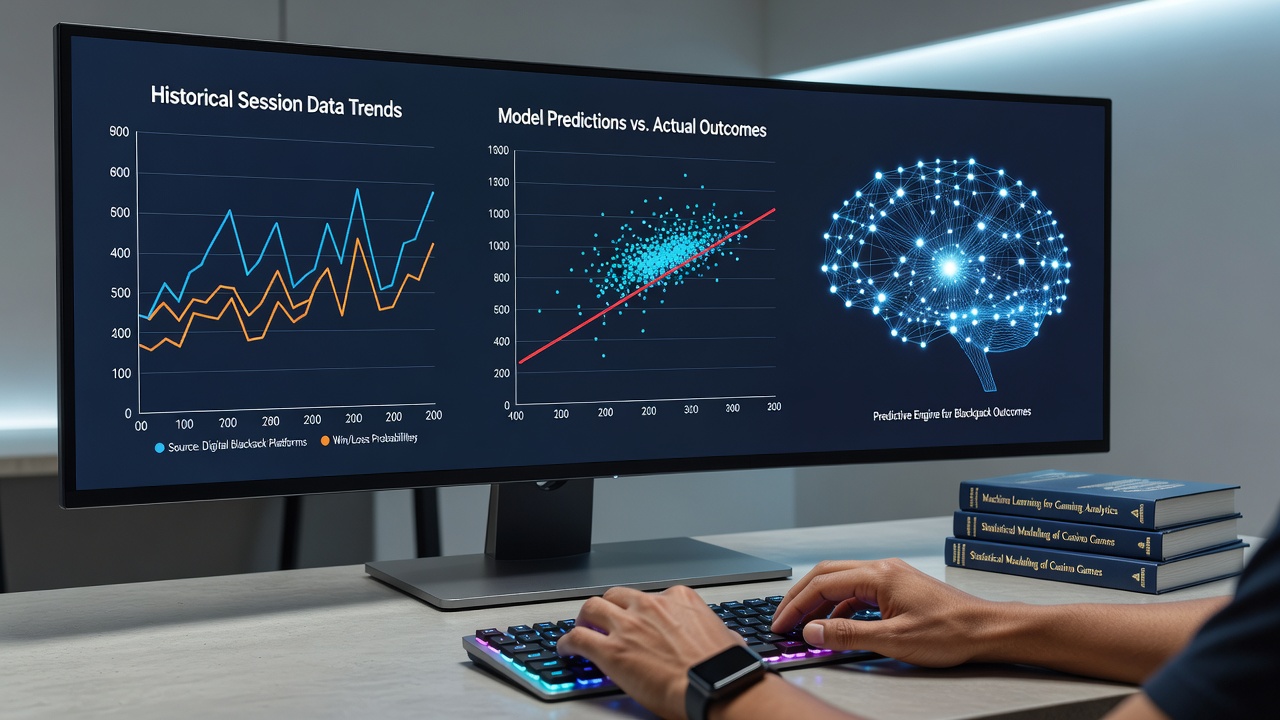
Digital platforms accumulate vast records of blackjack sessions that include hand results, wager amounts, timing between decisions, and player actions across thousands of rounds, and analysts use these archives to train models that estimate future outcomes under similar conditions. Researchers compile datasets from licensed operators where each entry captures variables such as starting bankroll, number of simultaneous hands, deck penetration estimates when available, and whether splits or doubles occurred. These structured logs form the raw material for algorithms that identify statistical patterns rather than guarantee results.
Data Preparation Steps in Model Development
Teams begin by cleaning raw session exports to remove incomplete entries and normalize timestamps so that sequences align across different table speeds, then they engineer features like average bet size relative to session length and frequency of insurance wagers. Outliers such as unusually long losing streaks receive separate flags because they can skew regression coefficients if left unaddressed. Validation sets drawn from later months test whether patterns observed in earlier data persist, and cross-validation techniques help confirm that models do not overfit to specific player cohorts.
Feature selection often incorporates derived metrics such as realized return per hand and deviation from basic strategy charts, while categorical variables track table rules like whether surrender is offered or how many decks are in play. Platforms operating in July 2026 continued to expand these datasets as regulatory frameworks in multiple jurisdictions required detailed logging for compliance audits.
Algorithm Choices and Performance Metrics
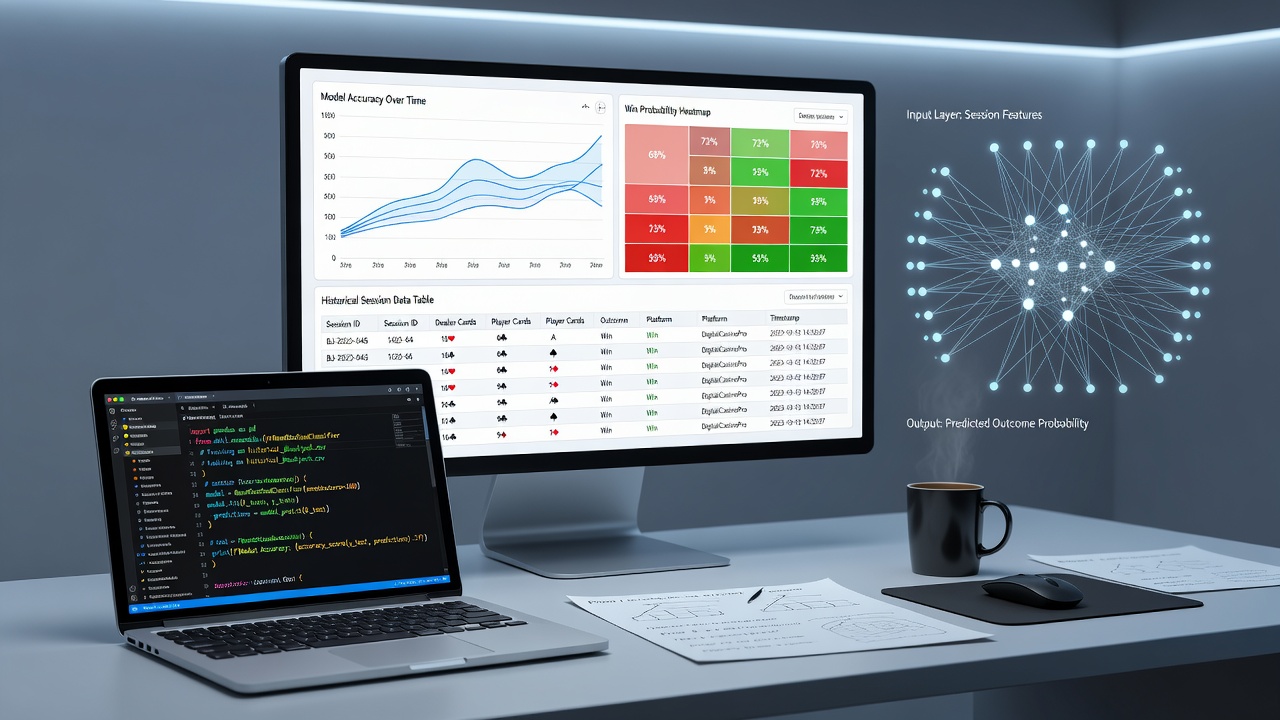
Logistic regression serves as a baseline because it directly outputs probabilities of winning or losing a given hand based on input features, yet ensemble methods like gradient boosting frequently achieve higher accuracy when interactions between variables grow complex. Neural networks capture nonlinear relationships such as how bet sizing patterns interact with time-of-day effects, although they demand larger training sets and careful regularization to avoid memorizing noise. Evaluation relies on metrics including area under the ROC curve for classification tasks and mean squared error for continuous predictions of expected value per session.
Studies from institutions like the University of Nevada, Las Vegas gaming research program have examined similar approaches in controlled simulations, showing that historical features improve short-term forecasts compared with random baselines. Accuracy remains bounded by the house edge and inherent randomness of card draws, so models typically achieve modest lifts rather than consistent player advantages.
Integration with Platform Operations
Operators apply trained models to segment player groups for responsible gaming interventions, identifying sessions where loss rates exceed modeled expectations and triggering automated messages. Some systems feed predictions back into dynamic table configuration, adjusting minimum bets or side bet availability when aggregate data signals elevated variance. External oversight bodies such as the Malta Gaming Authority review these implementations to ensure they align with fairness standards and do not create misleading representations of player odds.
Real-time scoring pipelines process incoming hands within milliseconds, updating probability estimates after each round and storing results for periodic retraining. Data pipelines must handle missing values when network latency interrupts logging, and privacy protocols anonymize identifiers before any modeling occurs.
Limitations and Ongoing Refinements
Even sophisticated models encounter distribution shifts when game rules change or when new player demographics enter the platform, requiring scheduled recalibration cycles. Sample sizes from individual accounts often prove insufficient for robust personalization, so most implementations aggregate across thousands of sessions while preserving stratification by stake level and game variant. Industry reports from the Canadian Gaming Association note that predictive tools serve primarily as operational aids rather than decision engines for individual play.
Continued expansion of session archives through 2026 supports incremental gains in model stability, particularly as more operators adopt standardized data schemas that facilitate cross-platform comparisons. Researchers monitor calibration plots to verify that predicted probabilities match observed frequencies across different bet sizes and rule sets.
Conclusion
Historical session data from digital blackjack platforms supplies the foundation for predictive models that estimate outcome distributions under observed conditions. Through careful feature engineering, algorithm selection, and validation against independent periods, analysts construct systems that quantify patterns within the constraints of game mathematics. Regulatory reviews and academic examinations confirm both the capabilities and boundaries of these approaches, while platform integrations demonstrate practical uses in monitoring and configuration. As datasets grow, refinements continue to focus on robustness across rule variations and player behaviors rather than claims of predictive certainty.