14 Jul 2026
From Free Tables to Funded Accounts: Blackjack Skill Development Pathways
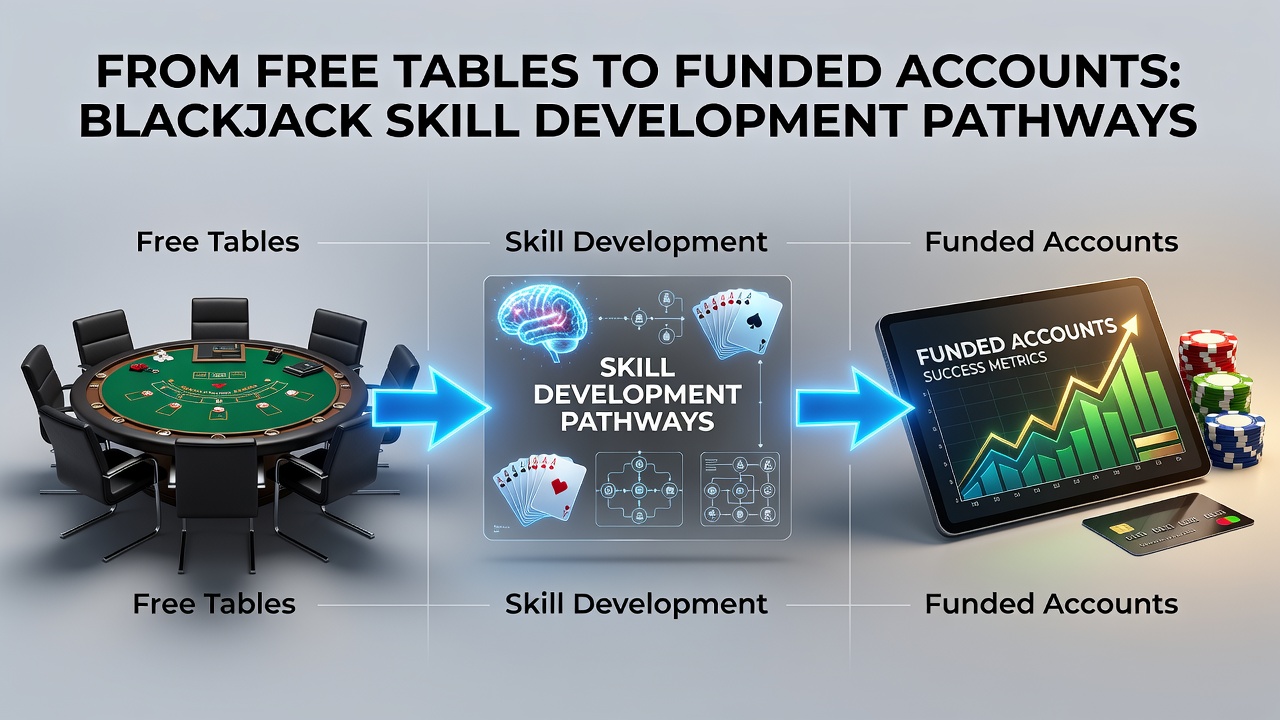
Blackjack skill development often begins with free tables that let players test rules, basic strategy charts, and decision sequences without financial risk, then progresses toward funded accounts once consistency emerges across thousands of hands. Observers note that many participants start in demo modes offered by online platforms where unlimited play hours accumulate data on hit-or-stand choices, splitting pairs, and doubling-down frequencies. These environments mirror live dealer streams yet remove pressure from bankroll fluctuations so learners can isolate variables such as deck penetration and dealer upcard tendencies.
Foundational Practice Through Unlimited Free Hands
Free-table sessions typically feature six-to-eight deck shoes with standard rules including dealer stands on soft seventeen, and participants use these rounds to internalize probability tables that reduce house edge to roughly 0.5 percent when followed precisely. Research from the University of Nevada, Las Vegas indicates that repeated exposure to simulated play correlates with measurable improvements in deviation accuracy during later real-money trials. Players frequently track their own statistics through built-in session logs that record win rates, bust percentages, and surrender decisions across hundreds of rounds.
Digital simulators add another layer by allowing custom rule sets that replicate regional variations found in Nevada, Atlantic City, or European casinos, so users rehearse adjustments before encountering them in funded environments. Data shows that individuals who log at least 5,000 practice hands demonstrate higher adherence to strategy matrices than those with fewer repetitions when tested under time constraints.
Transition Mechanisms and Progressive Funding Tiers
Once error rates stabilize below one misstep per hundred decisions, many pathways introduce low-stakes funded tables that bridge the gap between zero-risk practice and meaningful wagers. Platforms often structure these entry points with minimum bets starting at one unit while providing the same interface and rule set used in higher-limit rooms. According to figures released by the Nevada Gaming Control Board, average session lengths on low-denomination tables exceed those recorded at higher stakes, suggesting participants extend play time to refine timing and emotional control.
Skill checkpoints usually include verified performance in free tournaments or leaderboard challenges that award small real-money credits upon reaching accuracy thresholds. These milestones create documented progress records that operators reference when approving account upgrades to standard funded status. One study released in 2025 tracked a cohort that moved from free tables to funded play after meeting a 98 percent basic-strategy compliance rate over 2,000 hands, and results indicated reduced volatility compared with control groups that skipped verification steps.
Advanced Tracking Tools and July 2026 Platform Updates
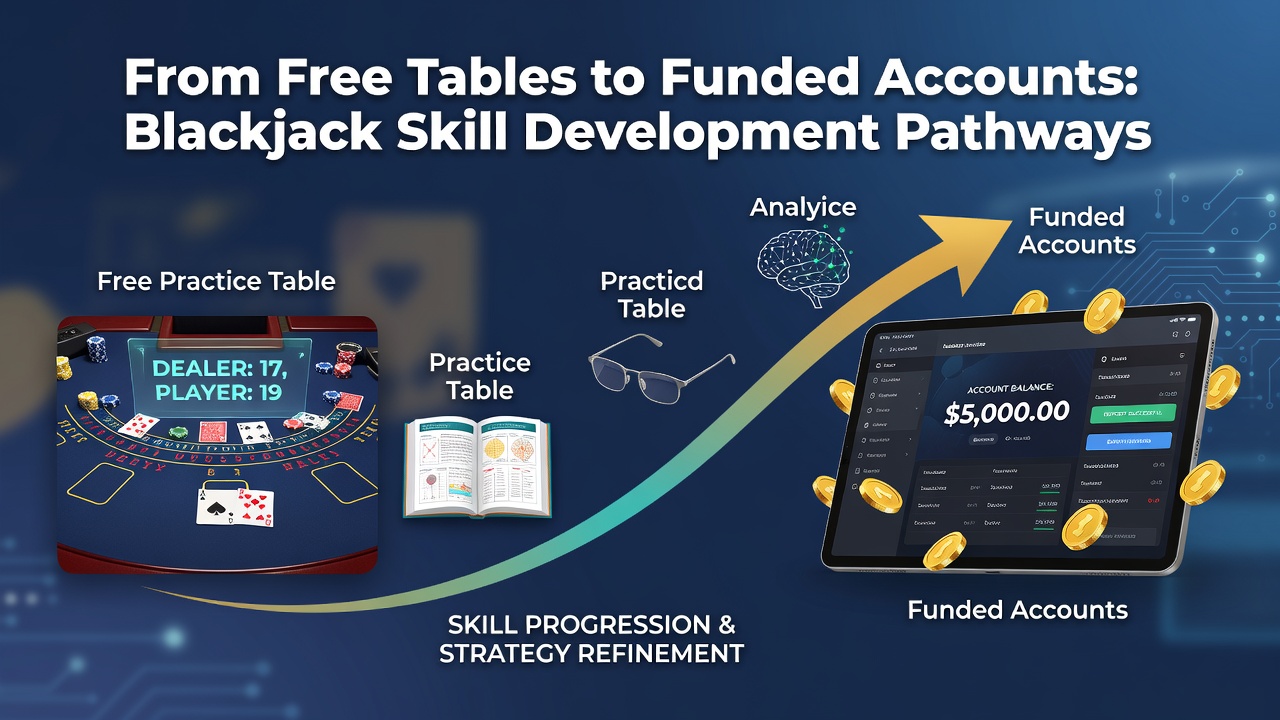
By July 2026 several major operators plan to integrate session analytics dashboards that export hand histories directly into third-party review software, enabling users to upload data for automated strategy audits. These tools flag deviations in real time during funded sessions while preserving the same layout that appeared in earlier free-table practice, thereby maintaining continuity across the development pathway. Industry reports note that such seamless data transfer reduces the cognitive load associated with switching between environments.
Card counting pathways follow similar staged models yet add layers of true-count conversion and bet-spread calibration that require separate verification before larger unit sizes appear in funded accounts. Training sequences typically begin with single-deck drills at no cost, advance through multi-deck simulations with variable penetration, and conclude with monitored low-stakes sessions where spread compliance is logged automatically. External audits conducted by organizations such as the American Gaming Association confirm that structured progression correlates with lower disqualification rates during casino compliance checks.
Conclusion
Skill development pathways therefore rely on measurable checkpoints, consistent rule replication, and documented performance thresholds that guide movement from free tables to funded accounts. Platforms continue to refine analytics and tiered funding structures, while regulatory data from multiple jurisdictions supports the value of staged practice in maintaining long-term consistency across blackjack formats.