23 Jun 2026
How Portable Device Interfaces Influence Deviation Decisions in Blackjack Switch and Similar Variants
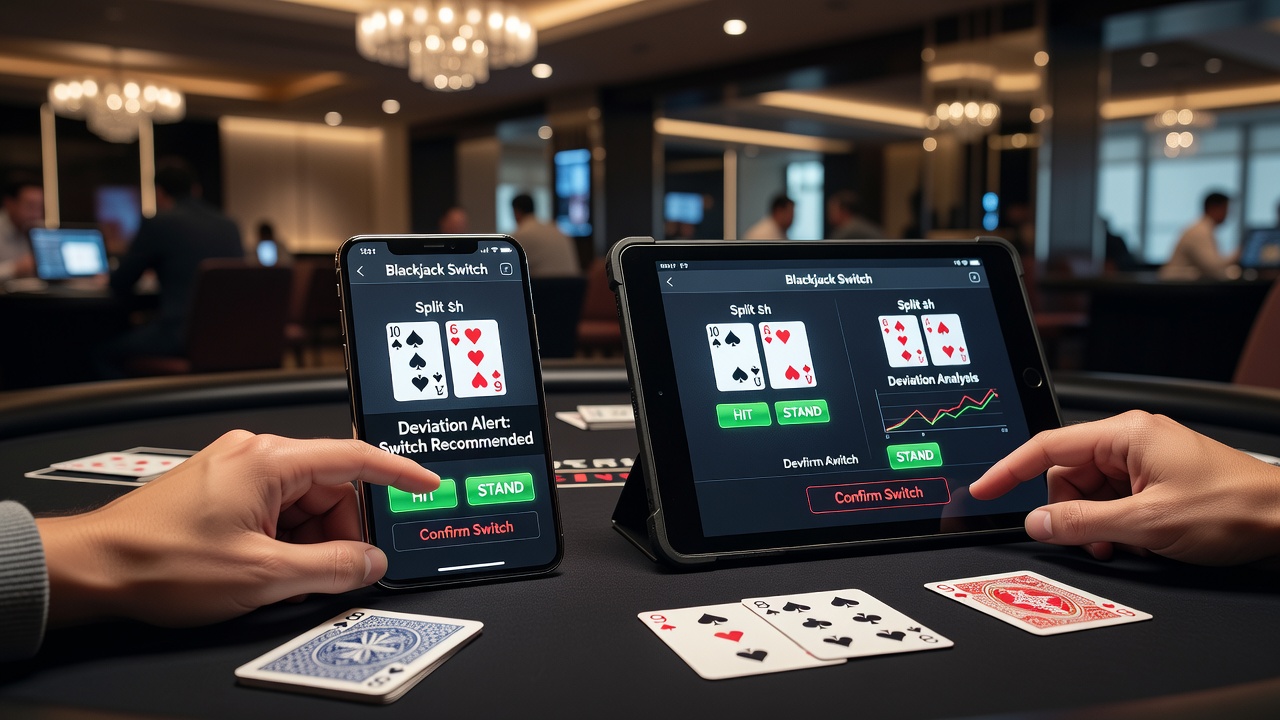
Portable device interfaces shape player interactions with Blackjack Switch through layout, touch responsiveness, and visual cues that guide card switching choices between paired hands. These elements affect timing and accuracy when players consider deviations from standard strategy based on remaining deck composition or dealer upcards. Data from gaming operators shows increased mobile participation in variants like Blackjack Switch since platform updates rolled out in early 2025.
Interface Layout and Switching Mechanics
Blackjack Switch rules allow players to exchange the top cards of two hands after the initial deal, and portable screens display these options in grids or swipe zones that vary by app provider. Researchers note that larger touch targets reduce mis-taps during rapid switches, while smaller buttons on compact phones correlate with higher rates of unintended holds. Studies from the University of Nevada, Las Vegas track how split-screen views on tablets present both hands simultaneously, enabling quicker visual assessment of potential switches compared to stacked layouts on smartphones.
Deviation decisions occur when players alter basic switching strategy according to card counting systems adapted for the variant. Interface elements such as real-time count indicators or color-coded probability overlays appear in some applications, and their placement influences whether users apply those adjustments consistently. Figures from operator analytics reveal that apps with persistent count displays see more frequent deviations on borderline hands, particularly when the running count suggests a switch improves expected value.
Touch Response and Decision Timing
Latency in touch registration affects the window for executing switches before the dealer proceeds. Portable devices with higher refresh rates register inputs faster, which supports precise deviations during multi-deck shoes where timing windows narrow. Data indicates that sessions on devices with sub-50-millisecond response times show elevated deviation frequency in the later stages of a shoe compared to older hardware.
Similar variants such as Double Exposure or Pontoon incorporate parallel decision points, and interface designers adjust confirmation prompts accordingly. On phones, haptic feedback confirms a switch action, while tablets rely more on visual highlights. Observers report that these feedback differences alter hesitation patterns, with some players pausing longer on mobile before committing to a deviation.
Visual Cues and Information Presentation
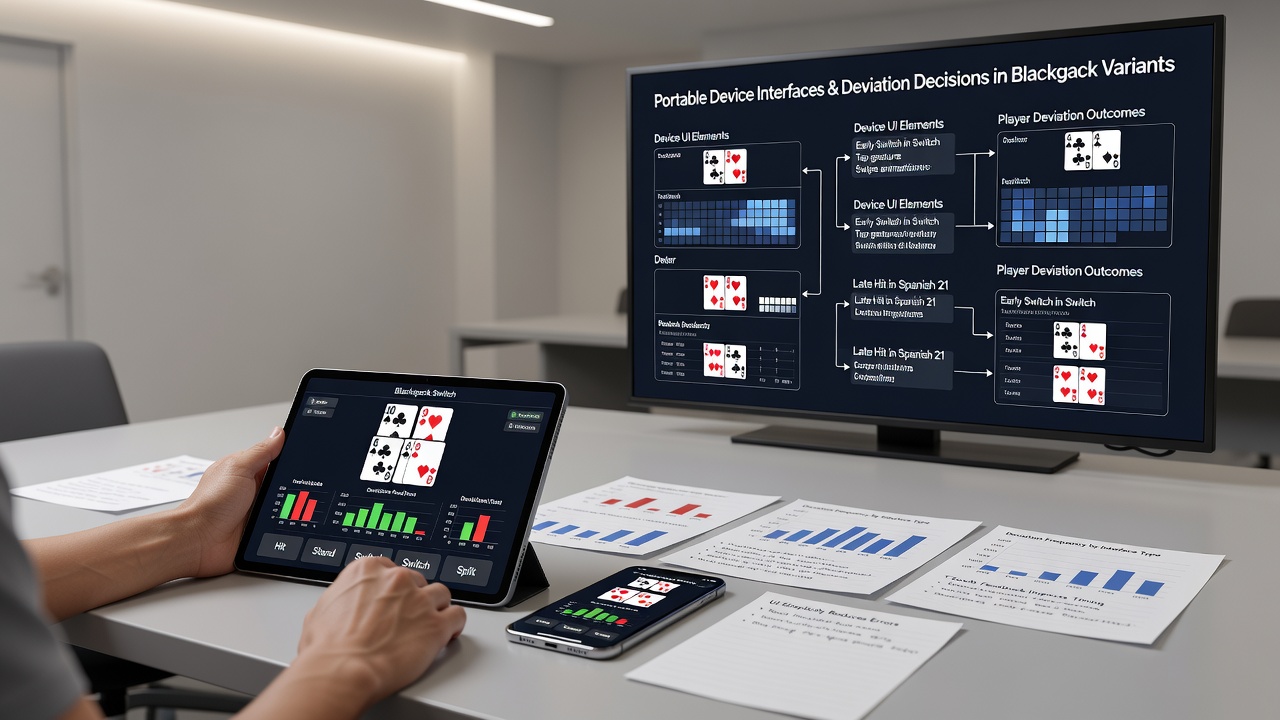
Screen size dictates how much supplementary data appears alongside the cards. Larger portable displays accommodate running count trackers or expected-value meters that prompt deviations, whereas smaller phones limit such information to expandable panels. Research compiled by the Nevada Gaming Control Board in reports covering 2024 through 2025 documents shifts in player behavior when interfaces prioritize card visibility over auxiliary tools.
In June 2026 several major platforms introduced adaptive interfaces that resize deviation prompts based on detected device orientation. Landscape mode on tablets expands the view of both hands and any active count, supporting more calculated switches. Portrait orientation on phones compresses these elements, which operators link to fewer deviations per session according to aggregated play logs.
Adaptations in Comparable Variants
Blackjack Switch shares decision structures with games that feature multiple simultaneous hands or exposed dealer cards. Portable interfaces for these titles often reuse switch or exchange mechanics, and players transfer habits across platforms. Industry reports show that when an app standardizes button placement across variants, deviation consistency improves because muscle memory carries over from one title to another.
Regulatory filings from the Alcohol and Gaming Commission of Ontario highlight how Canadian operators monitor interface-driven play patterns in multi-hand formats. Their data sets track correlations between screen resolution and the rate at which users deviate during late-shoe situations, providing operators with metrics for interface refinement.
Conclusion
Portable device interfaces continue to evolve alongside Blackjack Switch and its related variants, with layout, response characteristics, and information density directly modulating how often players execute strategy deviations. Continued monitoring by regulatory bodies and academic groups supplies the metrics that guide future design adjustments across global markets.