31 May 2026
Shuffle Mechanics and Fairness Protocols in Prolonged Online Blackjack Rounds
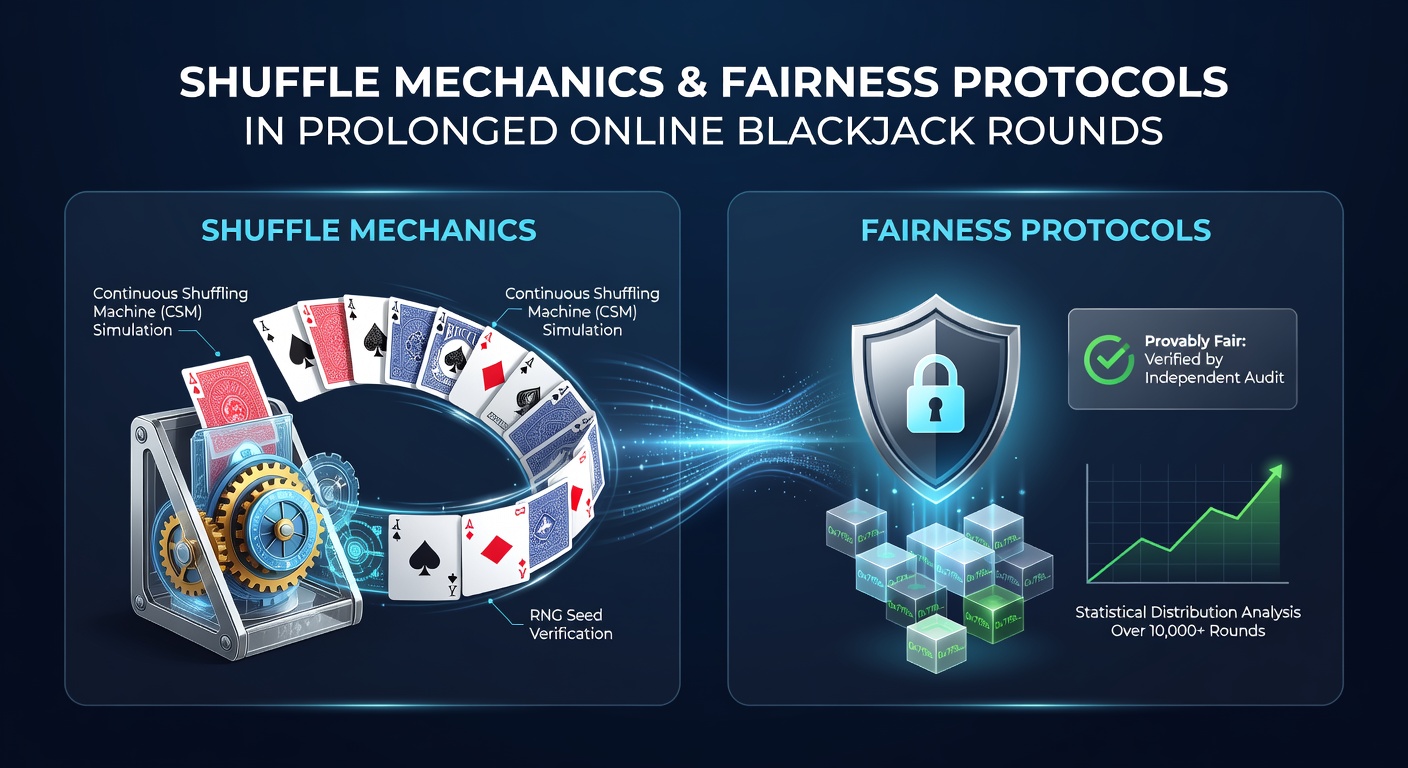
Online blackjack platforms manage extended play sessions through automated shuffle systems that differ sharply from physical casino practices, and these systems rely on certified random number generators to maintain deck randomness across hundreds or thousands of hands without interruption. Data from industry testing labs shows that prolonged rounds, which can span multiple hours or days in some formats, require continuous verification of shuffle integrity rather than periodic manual intervention.
Core Shuffle Algorithms in Digital Environments
Software developers implement variants of the Fisher-Yates shuffle to reorder virtual decks, and this method ensures each permutation occurs with equal probability when executed correctly on a properly seeded RNG. In prolonged sessions the algorithm often runs in continuous mode, reshuffling remaining cards after every hand or at set intervals measured in seconds, which prevents any predictable sequence from emerging as cards are depleted. Observers note that batch shuffling, where a full deck is reordered only after a certain number of hands, appears less frequently in modern platforms because regulators favor continuous methods that reduce opportunities for pattern recognition over long durations.
Seed generation draws from multiple entropy sources including hardware clocks, network traffic, and thermal noise readings, and these combined inputs feed into cryptographic hash functions that produce the final random values. Studies conducted by independent laboratories confirm that platforms using dual RNG setups, one for card values and another for shuffle timing, achieve statistical distributions that pass chi-square and runs tests at rates exceeding 99.9 percent across millions of simulated hands.
Handling Extended Play Without Physical Resets
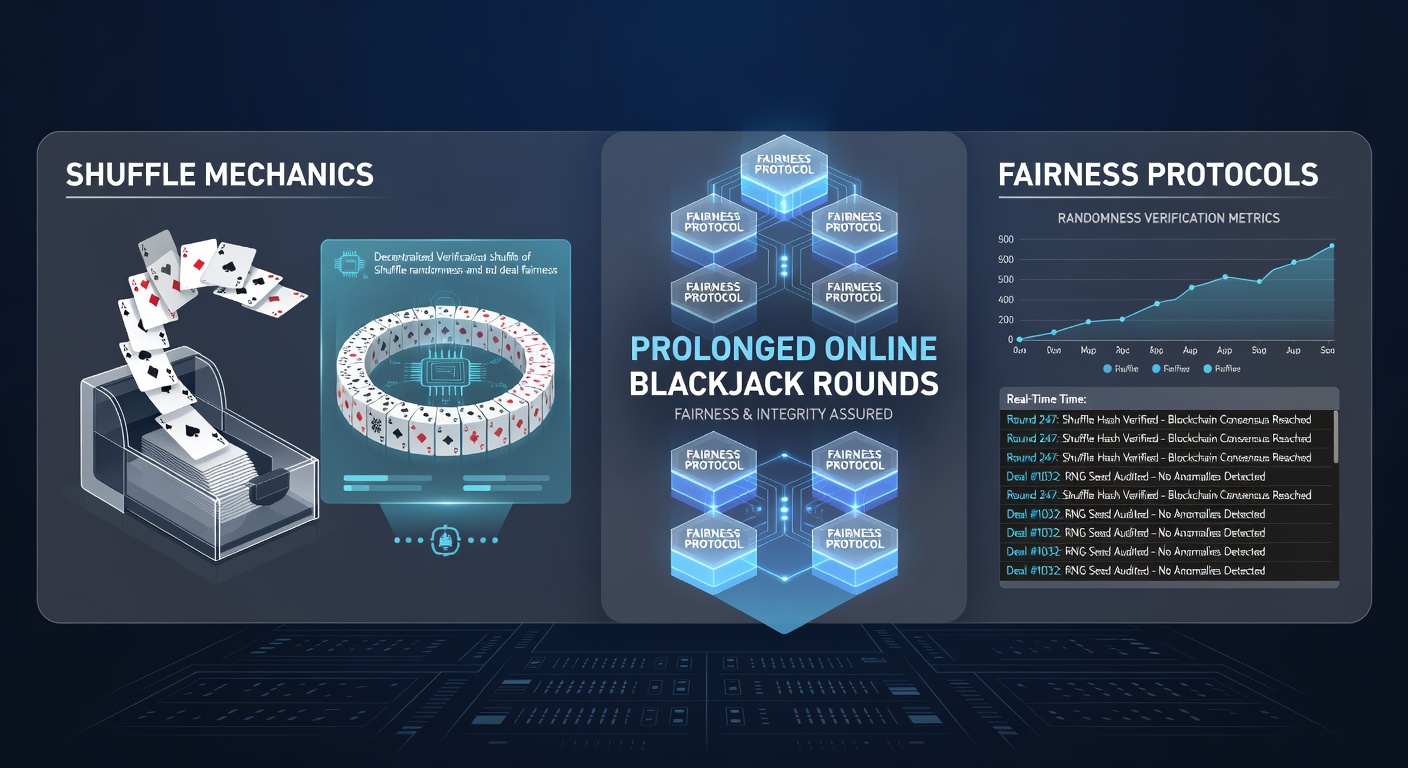
Prolonged rounds eliminate the need for dealer breaks or physical deck swaps, yet fairness protocols still mandate periodic integrity checks that occur automatically in the background. Systems log every card draw and shuffle event to immutable audit trails, allowing later reconstruction of any session segment if discrepancies arise. In May 2026 several jurisdictions updated their technical standards to require timestamped verification snapshots every 15 minutes during continuous play, a measure designed to detect any drift in RNG output before it could affect multiple hands.
Multi-deck configurations common in online variants, often six or eight decks, undergo virtual penetration tracking that mirrors live dealer rules, and once the cut card position is reached the remaining cards trigger an automatic reshuffle. Platforms that support infinite blackjack tables maintain separate RNG instances per virtual seat while sharing a common deck state, which creates additional complexity for fairness verification yet still relies on the same core shuffle mathematics.
Certification and Ongoing Monitoring Requirements
Regulatory bodies in North America and Europe require third-party evaluation of shuffle implementations before any platform receives operational approval, and organizations such as Gaming Laboratories International conduct both initial certification and periodic re-testing. These evaluations include source code review, statistical analysis of output sequences, and stress testing under simulated prolonged conditions that replicate weeks of uninterrupted play. Australian authorities apply comparable standards through their own accredited labs, emphasizing geographic diversity in oversight to prevent localized vulnerabilities.
Live monitoring systems flag any deviation from expected randomness parameters in real time, and operators must pause play immediately if thresholds are breached until the issue receives investigation. Research reports from academic institutions in Canada indicate that platforms maintaining public summaries of their RNG performance metrics experience fewer player disputes, because transparency allows independent verification of shuffle fairness without compromising proprietary code.
Security Measures Against External Interference
Encryption protects RNG seed data and shuffle outputs during transmission between server components, while access controls limit who can view or modify the underlying algorithms. Penetration testing conducted annually by approved firms examines potential attack vectors including timing side-channels and memory scraping attempts that could theoretically predict future shuffles. Data collected across multiple jurisdictions shows that platforms passing these rigorous checks maintain shuffle integrity rates above 99.999 percent over extended operational periods.
Some operators publish summaries of their fairness testing outcomes through industry associations, which provides players with aggregated statistics rather than raw session data. These reports typically cover parameters such as deck randomness uniformity and shuffle frequency adherence, offering evidence that prolonged rounds do not introduce cumulative bias when protocols receive proper implementation.
Conclusion
Shuffle mechanics and fairness protocols in prolonged online blackjack rounds rest on cryptographic RNG foundations, continuous algorithmic reordering, and layered certification processes that together ensure consistent randomness regardless of session length. Regulatory updates scheduled for May 2026 reinforce the requirement for frequent automated checks and transparent audit trails, while independent laboratories continue to validate that properly implemented systems maintain statistical fairness across millions of hands. Players and operators alike benefit from these standardized approaches because they reduce uncertainty and support sustained engagement without compromising game integrity.