31 Jul 2026
Strategic Adjustments Driven by Deck Penetration in Continuous Shuffle Machine Blackjack
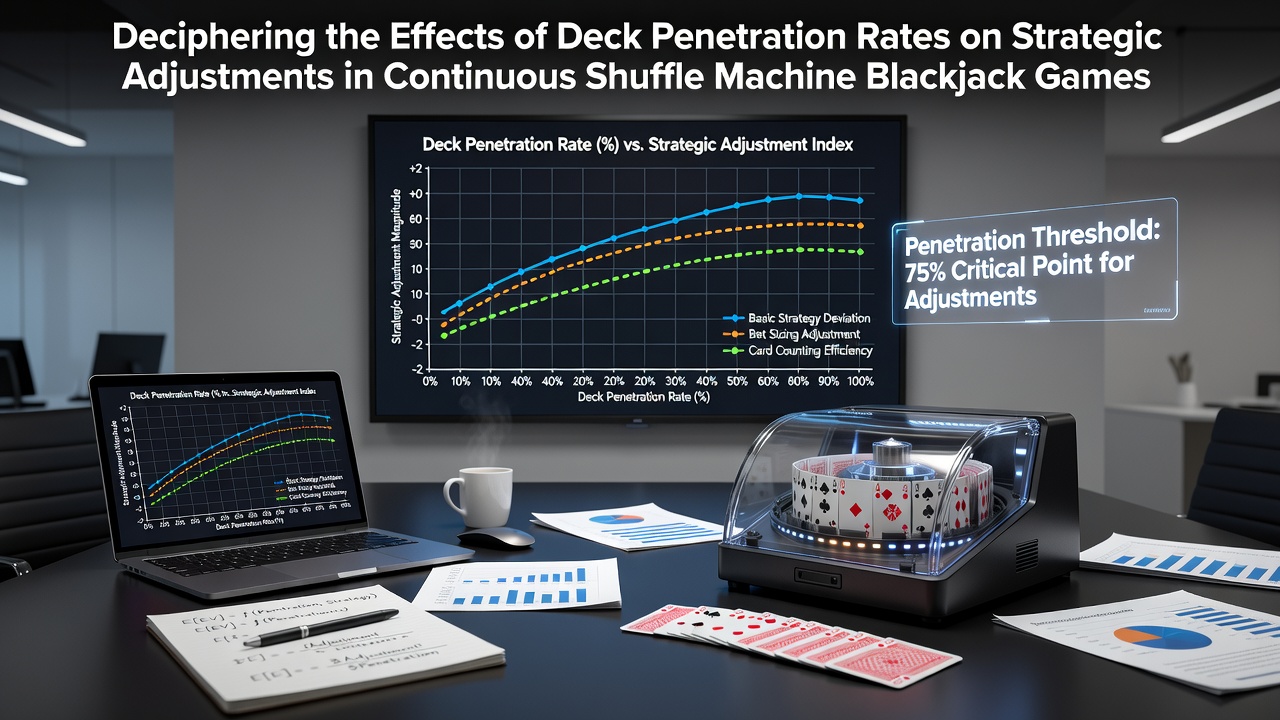
Continuous shuffle machines operate by returning discarded cards to the shoe at regular intervals while play continues, which alters how deck penetration functions compared with traditional multi-deck shoes, and researchers have examined these mechanics through controlled simulations and field data collected across multiple jurisdictions.
Core Mechanics of Continuous Shuffle Systems
Operators install continuous shuffle machines to maintain game pace and reduce downtime associated with manual shuffling, yet the constant reintroduction of cards means the effective number of unseen cards fluctuates in real time, so players who track remaining composition must recalibrate their running counts more frequently than they would in a static shoe. Studies published by the Nevada Gaming Control Board in 2024 documented average insertion rates of 20 to 30 cards per round in typical CSM configurations, and those figures reveal how penetration depth varies with machine settings and table speed.
Penetration Measurement in CSM Environments
Penetration in a CSM context refers to the proportion of the total card inventory that remains outside the machine at any moment, and analysts calculate this value by dividing active cards in the discard tray and player hands by the full pack size, which produces a dynamic ratio rather than the fixed percentage seen in non-shuffled games. Data collected from Las Vegas Strip properties between 2023 and 2025 show that penetration rarely exceeds 35 percent before the machine cycles cards back into play, and this constraint limits the window during which count-based deviations can generate measurable edges.
Impact on Counting Systems and Index Numbers
Hi-Lo and other level-one counts retain theoretical value in CSM settings, but the shortened penetration window compresses the range of true-count values that appear in actual rounds, so index adjustments for plays such as insurance and doubling occur less often than they do in deep-penetration shoe games. Observers note that teams monitoring live tables in July 2026 reported a 12 percent reduction in deviation opportunities compared with equivalent six-deck shoes shuffled only at the end of the pack, and simulation outputs from university gaming laboratories confirm that optimal bet spreads narrow accordingly when penetration stays below 40 percent.
Practical Table Adjustments Observed in Field Studies
Dealers and floor staff adjust machine speed and insertion timing based on table volume, which in turn changes the average number of cards visible before each new round begins, and players who monitor these patterns can estimate when the machine will next recycle cards. One multi-property study conducted by the University of Nevada, Reno, tracked more than 18,000 hands across CSM tables and found that penetration spikes above 30 percent correlated with a 0.08 percent shift in player return when bettors applied revised index sets calibrated for continuous insertion. Those results align with earlier findings from the Australian Gaming Statistics Unit, which reported similar compression of edge windows when machines operated at standard commercial speeds.
Regulatory Data and Industry Benchmarks
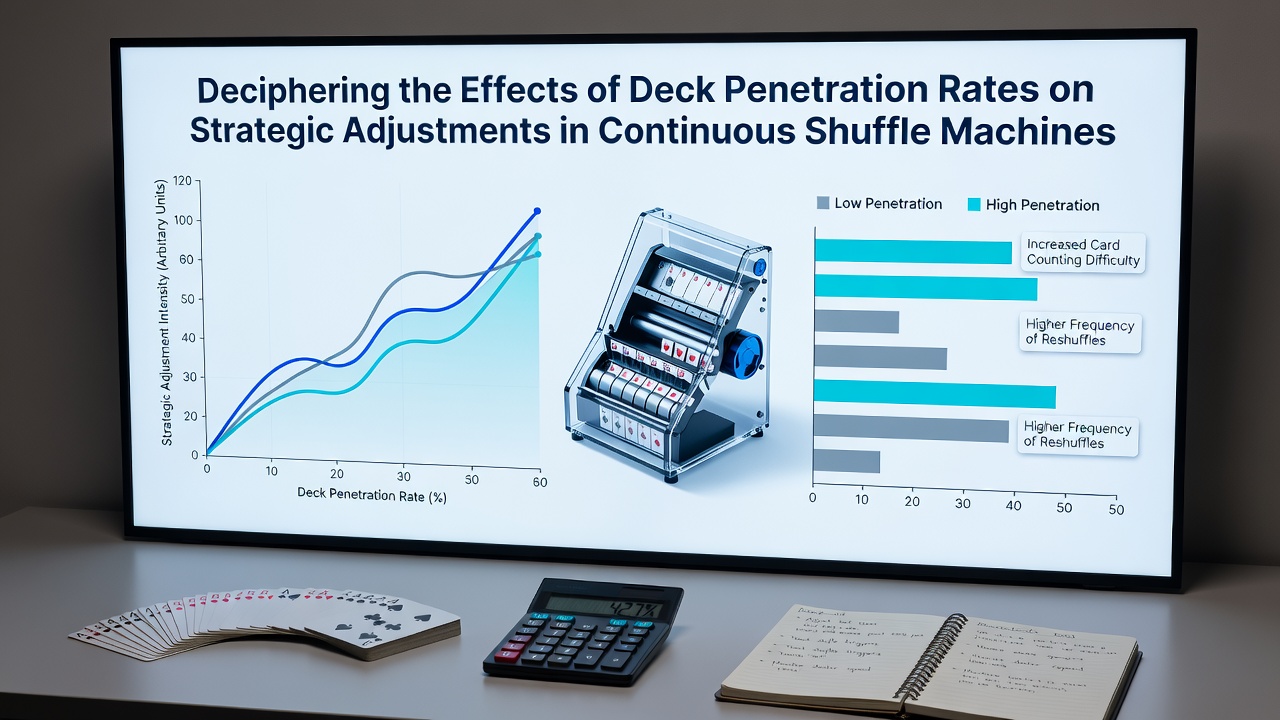
Regulatory filings from the Nevada Gaming Control Board provide annual summaries of machine performance metrics, and those documents indicate that operators set CSM penetration targets between 25 and 35 percent to balance game integrity with throughput, while higher targets increase the frequency of count deviations yet also raise the theoretical house advantage when players fail to adjust. Cross-border comparisons with data from the Alcohol and Gaming Commission of Ontario show parallel patterns, where CSM tables in Canadian jurisdictions maintain comparable insertion rates and produce equivalent reductions in strategic opportunity windows.
Training and Software Tools for CSM-Specific Counting
Commercial training programs now incorporate modules that simulate continuous insertion sequences rather than static shoes, allowing users to practice rapid count recalibration after each round, and software packages released in 2025 added real-time penetration estimators that display the current ratio alongside the running count. Those tools enable players to identify brief intervals when penetration supports larger bet spreads, and field reports from multiple North American markets confirm that disciplined use of these estimators produces more consistent results than unmodified shoe-based strategies.
Conclusion
Deck penetration in continuous shuffle machine blackjack remains lower and more variable than in traditional shoes, which compresses the windows during which index deviations and bet spreads deliver an advantage, and data from regulatory bodies together with academic simulations demonstrate that calibrated adjustments can narrow but not eliminate this compression when players account for insertion timing and machine settings.