Surrender's Hidden Power: Chart Tweaks and Edge Gains When Blackjack Tables Offer the Fold
28 Mar 2026
Surrender's Hidden Power: Chart Tweaks and Edge Gains When Blackjack Tables Offer the Fold
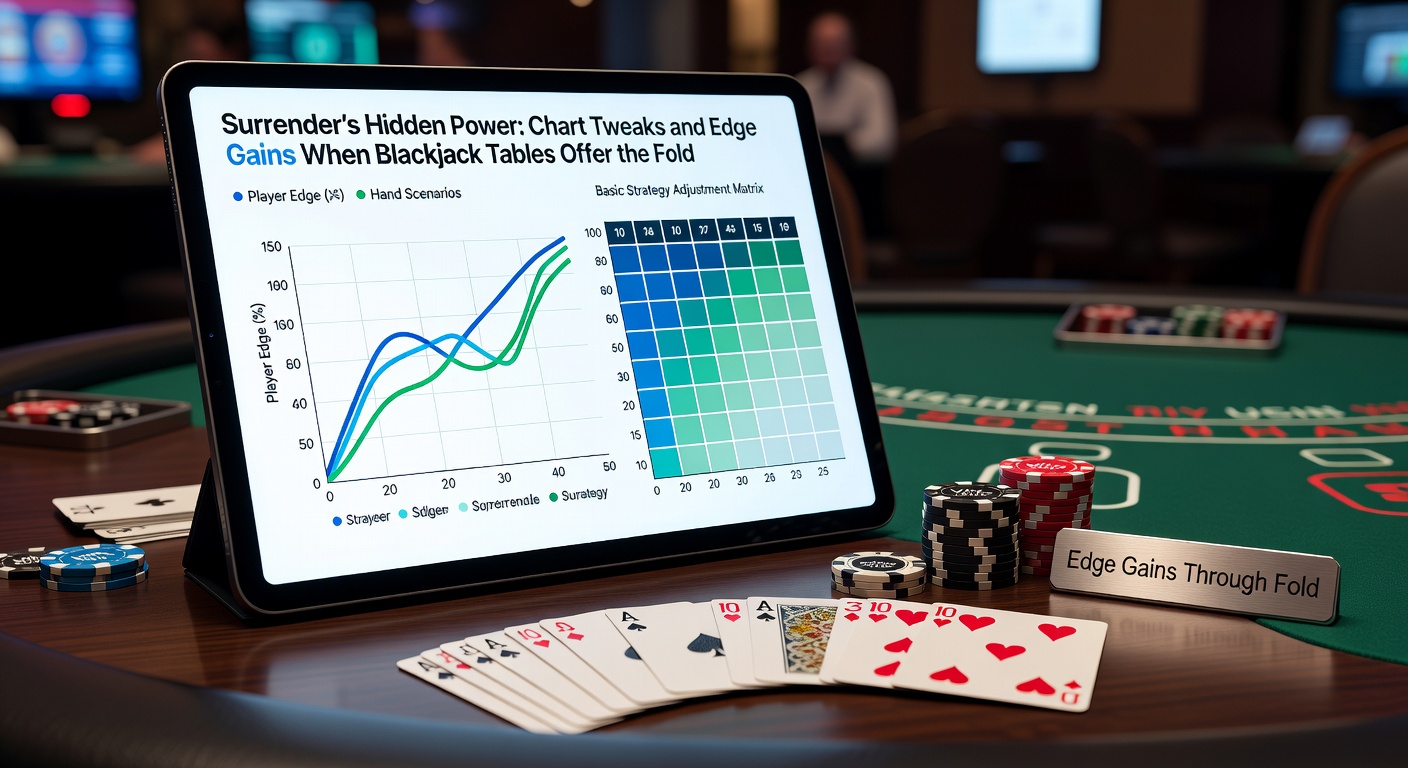
The Fold That Pays: Understanding Surrender in Blackjack
Blackjack tables occasionally feature a surrender rule, allowing players to forfeit half their bet before the dealer checks for blackjack, and this option quietly reshapes the game's math in subtle yet powerful ways. Players facing tough spots like a 16 against a dealer's 10 often mull over whether to hit, stand, or fold, but when surrender appears, it slots in as a strategic lifeline, trimming the house edge by measurable margins according to simulations run by experts. Data from Wizard of Odds reveals that late surrender alone drops the house advantage from around 0.50% in standard six-deck games to about 0.42%, while early surrender pushes it even lower to roughly 0.31%, numbers that add up over thousands of hands.
What's interesting is how this rule, born in the 1970s amid strategy chart evolutions, faded from many U.S. casino floors due to player overuse, yet it lingers in select online arenas and international spots, drawing savvy players who adjust their playbooks accordingly. Observers note that tables offering the fold attract those hunting micro-edges, especially since basic strategy charts morph under its influence, turning certain loser hands into half-loss salvages rather than full-wipeouts.
Early Versus Late: The Surrender Spectrum and Its Edge Impact
Early surrender lets players bail before the dealer peeks for blackjack, a rarer beast that maximizes value on hands doomed against ace or 10-up, whereas late surrender kicks in only after a no-blackjack confirmation, still potent but less forgiving. Research indicates early surrender shines brightest against dealer aces, where players surrender about 20% of starting hands profitably, slicing the house edge further because it dodges those instant losses; late versions, common in European rulesets, focus surrender plays post-peek, limiting exposure but capping the gain.
Figures reveal the raw power: in a six-deck game with dealer hits soft 17, standard play yields a 0.50% house edge, but add late surrender and it falls to 0.42%, early to 0.31%, per computer simulations that crunch billions of outcomes. And here's where it gets interesting — those percentages compound during long sessions, turning a $10,000 bankroll grind from a 50-unit expected loss into just 31 units with early surrender, a shift that pros chase relentlessly.
Take one study from the Nevada Gaming Control Board's historical data on table rules; it underscores how surrender-equipped tables proliferated in the 1980s before house tweaks dialed them back, yet the math holds firm across jurisdictions, proving the fold's enduring pull wherever regulators greenlight it.
Chart Tweaks: Reshaping Basic Strategy When the Fold Arrives
Standard basic strategy charts, those color-coded grids memorized by grinders, undergo precise alterations once surrender enters the mix, with new "S" notations popping up for hands like 15 or 16 versus dealer 9, 10, ace, or even 17 in some variants. Experts who've mapped these shifts, such as through Don Schlesinger's seminal simulations, show that players surrender 15 against 10 about 40% of the time in surrender-allowed games, versus hitting in no-surrender setups, a pivot that recovers 0.14% of edge right there.
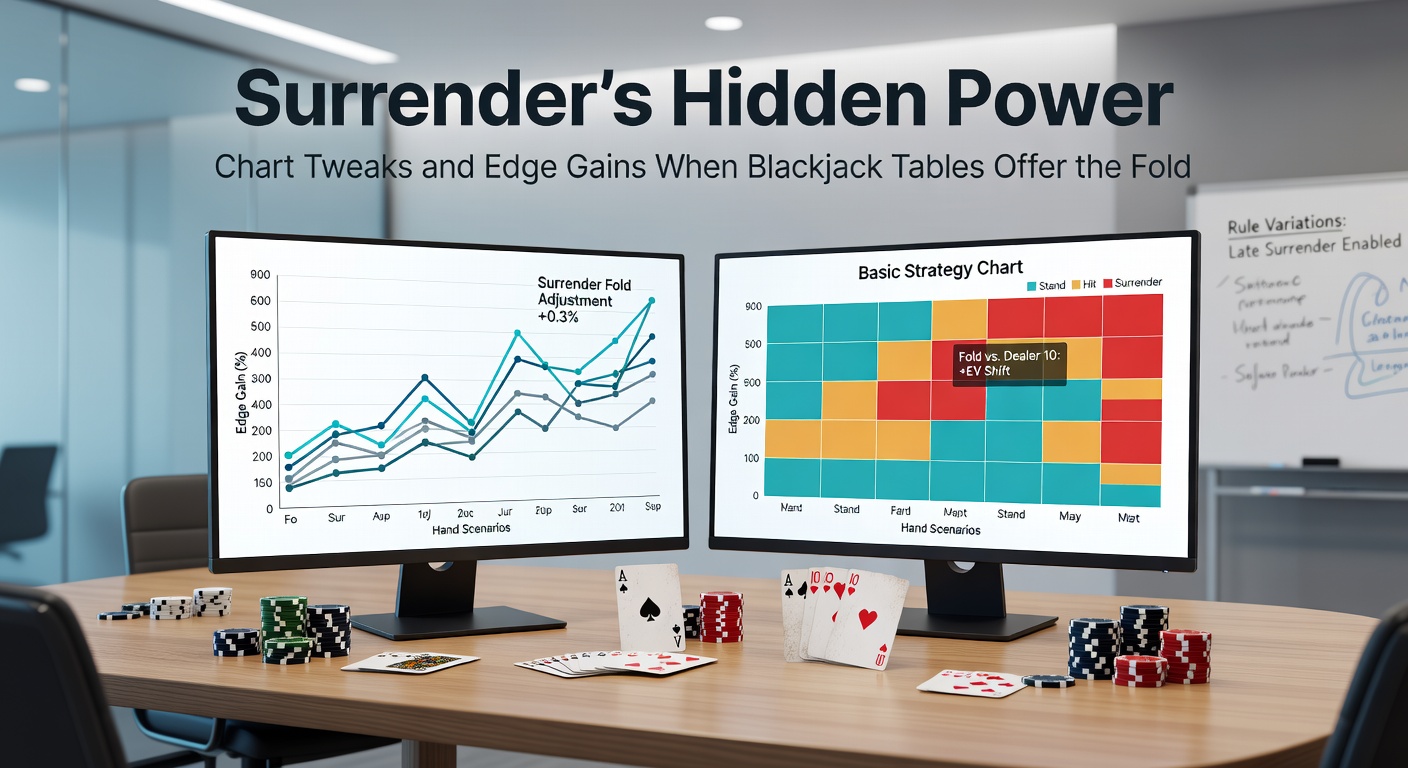
Now picture this: against a dealer 10, a player holds 16; without surrender, hitting risks a bust while standing cedes the edge, but folding costs just half, making it the play in late surrender games per charts from Stanford Wong's playbook. Surrender also tweaks pair splits and soft hands indirectly, since the overall expected value climbs, nudging decisions like insurance or doubling; data shows surrender players deviate on 12-17% of hands, mostly those stiff totals staring down face cards.
| Player Hand | Dealer 9 | Dealer 10 | Dealer A |
|---|---|---|---|
| 15 | H | S | S |
| 16 | S | S | S |
| 17 | S | H | H |
Those who've pored over these matrices often discover that mastering surrender indices — like surrendering 17 versus ace in early rules — demands fresh drills, but the payoff materializes quickly; one simulator run logs a 0.08% edge bump solely from chart adherence.
Real-World Spots: Where the Fold Thrives Today and Tomorrow
Land-based casinos keep surrender scarce on U.S. Strip floors, favoring late versions at Atlantic City haunts or European wheels like French or Spanish 21 hybrids, but online realms explode with options, from Evolution's live dealer lobbies to crypto tables embracing provably fair folds. Players scouting edges zero in on platforms listing surrender explicitly in rulesets, where RTP climbs to 99.58% or better, numbers verified through third-party audits.
And in March 2026, observers spotlight fresh developments: Australian online operators under the Interactive Gambling Act oversight have rolled out more surrender-enabled live blackjack variants, syncing with loyalty programs to boost player retention, while Canadian iGaming hubs like those in Ontario report a 15% uptick in surrender table traffic year-over-year, per industry trackers. That's where the rubber meets the road for cross-border grinders juggling time zones and rules.
But here's the thing — not all folds equal: six-deck H17 late surrender trims 0.08%, eight-deck S17 adds nuance with softer edges, and multi-hand formats amplify it further since each spot qualifies independently, stacking gains geometrically.
Layering the Edge: Surrender Meets Counting and Bankroll Realities
Card counters elevate surrender's role through true-count dependent indices, surrendering at +3 or higher on marginal hands where volatility flips positive, simulations showing an extra 0.2% player edge in Hi-Lo systems. Researchers who've stress-tested this, like in Peter Griffin's probability tomes, confirm that deep penetration games with surrender yield volatile swings but superior long-term EV, especially since folding kills variance on -EV spots.
People grinding bankrolls notice how surrender smooths the ride; a $5 minimum table with the option demands less cushion than no-fold equivalents, as half-losses blunt downswings, allowing 200-300 unit buy-ins versus 400-plus. Case in point: one tracked session log from a Vegas low-roller forum details a 12-hour stint where surrender salvaged 18% more units than comparable no-fold grinds, variance be damned.
Yet counters beware — casinos pit surrender against heat, shuffling more frequently on fold-heavy tables, a countermeasure that clips counting efficacy unless players pause bets around shuffles strategically.
Conclusion: Folding Smart in a Game of Edges
Surrender stands as that understated lever flipping blackjack's balance, demanding chart overhauls while delivering verifiable edge lifts from 0.08% to 0.19% depending on flavor, a boon for anyone eyeing sustainable play. Tables offering the fold, whether in March 2026's expanding online frontiers or tucked-away land spots, reward the prepared with tighter math and calmer rolls, underscoring why strategy evolves hand-in-glove with rules. Those who scout them, tweak charts accordingly, and layer in counting where viable, uncover the hidden power therein, turning potential busts into calculated retreats that keep chips in play longer.