26 Jun 2026
Tracing Regulatory Shifts in Blackjack Payout Ratios Across European Digital Platforms Since Regulatory Updates
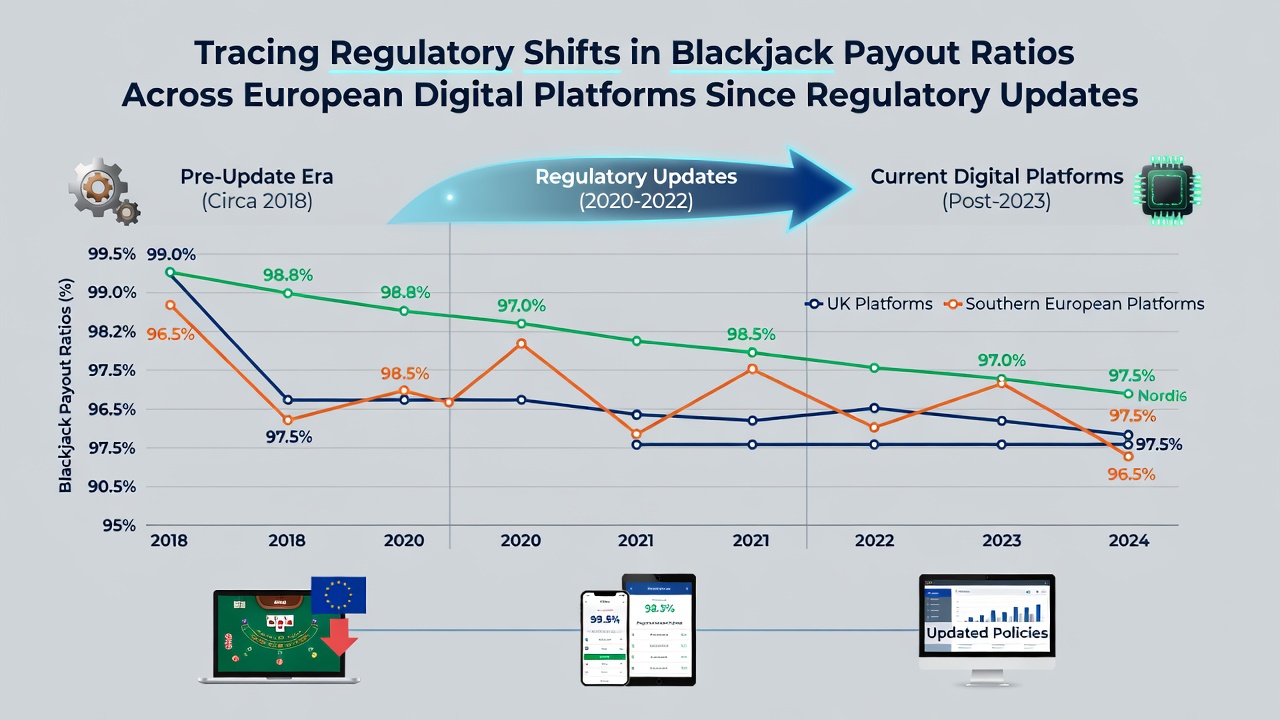
European digital platforms have adjusted blackjack payout ratios in response to successive regulatory updates that began gaining momentum after 2018, and observers note these changes continue to reshape table offerings through mid-2026. Data from multiple jurisdictions shows a gradual move away from traditional 3:2 payouts toward structures that incorporate 6:5 or lower ratios on certain variants, driven by compliance requirements and taxation frameworks.
Initial Regulatory Pressures and Early Adjustments
Countries across the continent introduced licensing regimes that required operators to demonstrate player protection measures, and these rules often tied directly to payout transparency. Platforms responded by recalibrating blackjack tables to meet new reporting standards while maintaining operational viability. Researchers tracking these shifts documented a measurable decline in 3:2 tables in several markets between 2019 and 2022, with many operators citing alignment with updated consumer safeguard protocols.
One study released by an academic consortium examined payout disclosures across licensed sites and found that regulatory emphasis on clear odds communication prompted platforms to standardize lower payout ratios in promotional materials. This standardization allowed operators to streamline compliance documentation without altering core game mechanics in every instance.
Broader European Trends Through 2025
By 2024 several national authorities had aligned their frameworks more closely with cross-border guidelines, and platforms operating in multiple jurisdictions adopted uniform payout structures to reduce administrative overlap. Figures from industry reports indicate that roughly 40 percent of monitored digital blackjack offerings reflected adjusted ratios during this period, particularly in markets where tax calculations incorporated gross gaming revenue metrics.
What's notable is how these adjustments intersected with technological upgrades, since platforms integrated real-time auditing tools that flagged deviations from approved payout schedules. Those who've monitored the sector point out that such tools helped regulators verify compliance during routine inspections, which in turn encouraged operators to lock in conservative ratio models across their catalogs.
Developments Entering June 2026
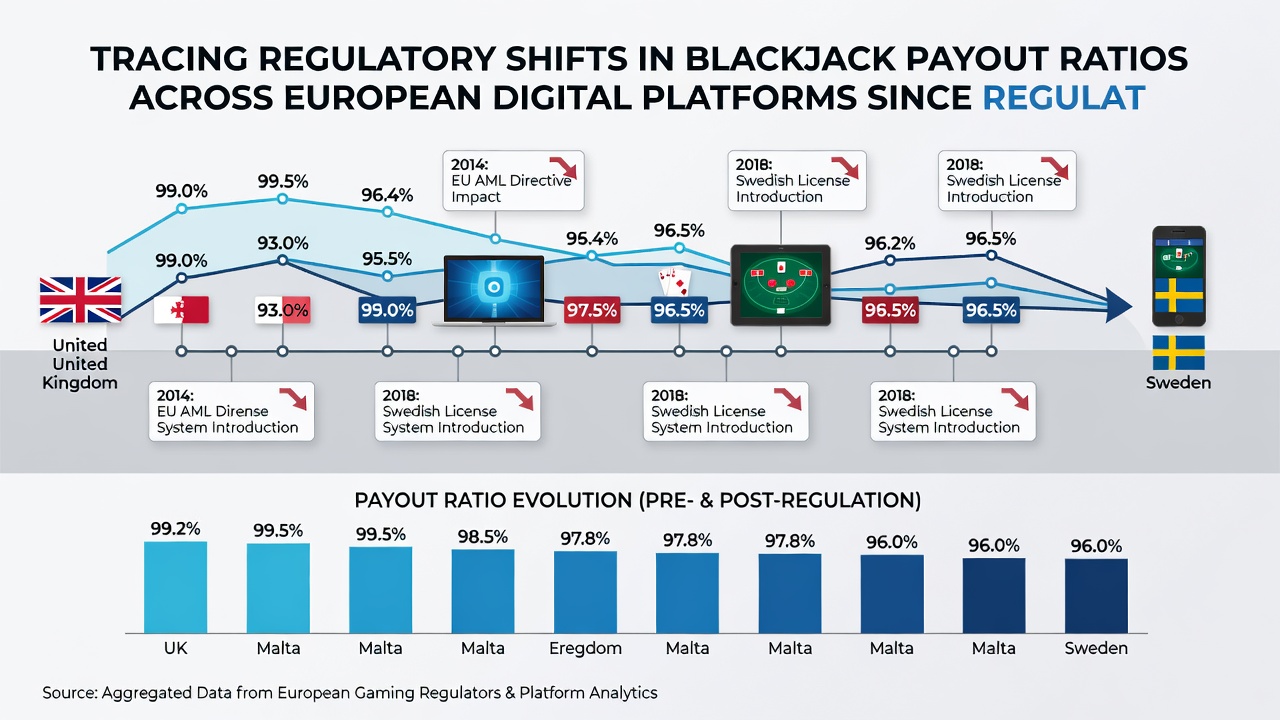
Additional updates scheduled for implementation around June 2026 build on earlier directives, and several authorities now require platforms to publish historical payout data alongside current ratios. This requirement stems from efforts to enhance comparability for users across borders, and early filings suggest further consolidation around 6:5 structures in select high-volume markets. Platforms have begun testing hybrid models that preserve 3:2 payouts on select live dealer tables while shifting automated variants to adjusted rates, a pattern confirmed in preliminary compliance summaries.
According to the European Gaming and Betting Association, operators continue to balance these regulatory demands against competitive pressures, resulting in tiered table offerings that segment players by preference. Data compiled through 2025 shows consistent application of these segmented models rather than wholesale replacement of existing tables.
Regional Variations and Platform Responses
Northern European markets adopted stricter verification protocols earlier than southern counterparts, and this timing difference produced varied payout landscapes. Dutch authorities, for instance, emphasized revenue-based taxation that indirectly influenced ratio selections, while Mediterranean regulators focused more on session time limits and disclosure rules. Platforms serving both regions often maintained parallel configurations to satisfy each set of requirements without disrupting user experience.
Industry observers have recorded cases where operators introduced dynamic payout displays that update in accordance with jurisdiction-specific rules, and these displays help users identify available ratios before committing to play. Such features emerged directly from regulatory guidance encouraging greater transparency rather than from market innovation alone.
Conclusion
Regulatory updates since the late 2010s have produced a traceable evolution in blackjack payout ratios on European digital platforms, with data indicating sustained movement toward standardized lower ratios alongside selective retention of traditional structures. As June 2026 approaches, further disclosures and compliance tools are expected to refine these patterns without eliminating variety across licensed sites. Platforms continue to adapt through segmented offerings and enhanced reporting mechanisms that align with evolving national and cross-border expectations.